Catalog cards show one representative trim per model. Buy score is a 0-100 MotoCompare estimate from model-year confidence, recalls, specs, and ownership context. Verify before making purchase decisions.
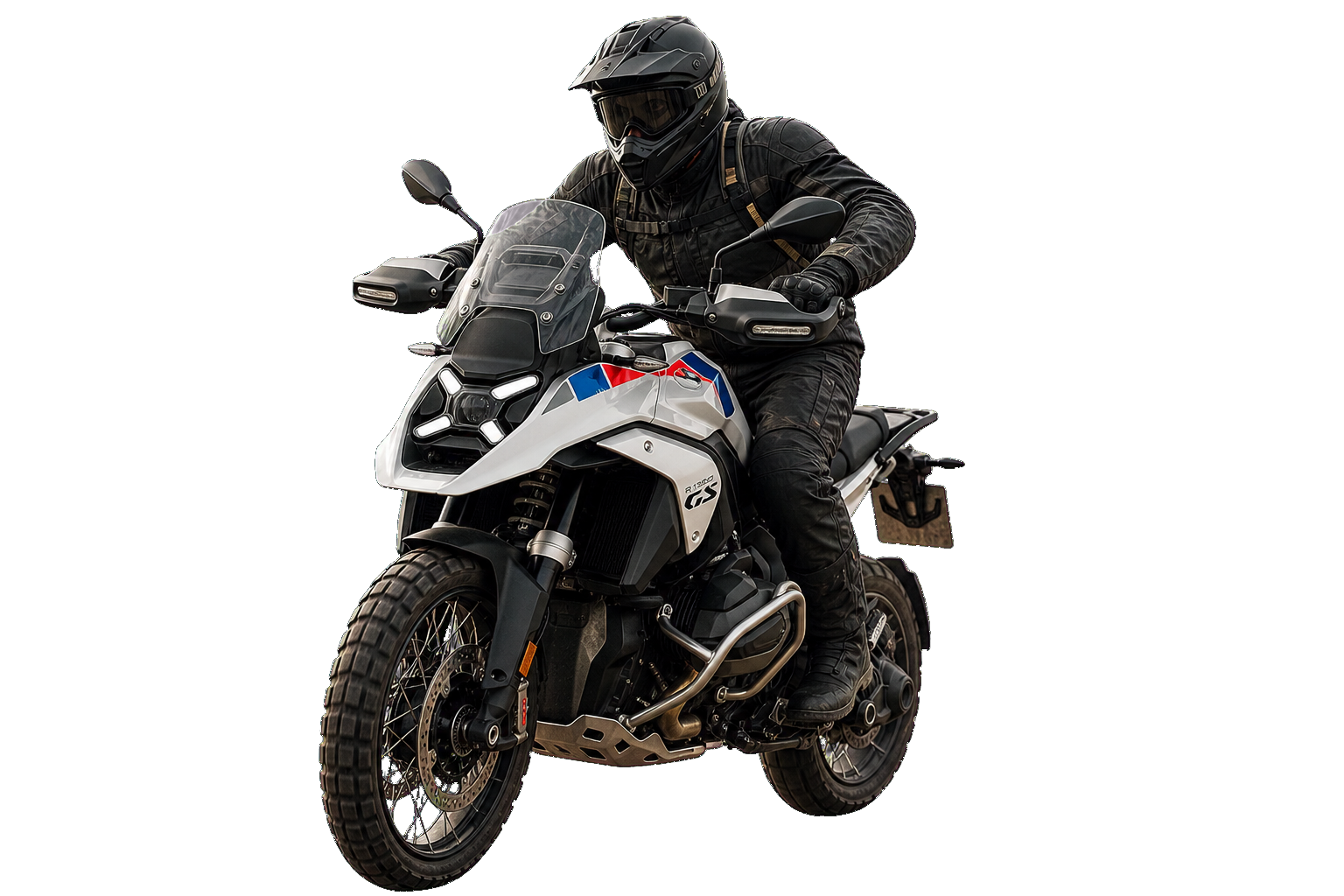
The R 1300 GS is the segment-defining ADV: a 1,300cc ShiftCam boxer with radar-linked adaptive cruise control, 26 lbs lighter than its predecessor, and class-leading touring range. Telelever front suspension eliminates brake dive but has a distinct on-center feel unlike conventional forks — a test ride before committing is well worthwhile.
The Rebel 1100 drops Honda's Africa Twin-derived 1,084cc parallel-twin into a cruiser chassis with ride modes, traction control, and cruise control standard — plus an available DCT automatic — at under $10,000. The 3.6-gallon fuel tank limits touring range, and the parallel-twin engine note will disappoint buyers expecting traditional V-twin character; this is a modern-tech cruiser, not a classic.
The Street Glide's fork-mounted batwing fairing provides class-leading wind protection with a lower bagger profile versus a full dresser — the core of the ongoing Street Glide vs. Road Glide buyer debate. Milwaukee-Eight torque makes the 811-lb weight manageable on the highway; budget $1,000–$2,000 for accessories.
Yamaha's 689cc CP2 parallel-twin punches well above its displacement with 73 hp and a tractable powerband that rewards progression — at 397 lbs it undercuts every mid-displacement naked rival in weight. Used at $5,500–$7,500, the MT-07 is the natural comparison for any buyer considering the Z650 or Street Twin.
Launched in 2023 as the Ninja 400's successor, the Ninja 500's 451cc parallel-twin adds 15% more displacement while keeping the same 375-lb weight and 30.9-inch seat that made the 400 the benchmark beginner sportbike. At $5,699 it undercuts the Honda CBR500R by $200 while offering comparable ergonomics — the first comparison any new sport-rider should make.
Honda's Africa Twin combines a 1,084cc parallel-twin with an available DCT automatic transmission — the dual-clutch option is a primary reason many buyers seek it out, delivering smooth shifting in technical terrain and traffic without the weight penalty of older automatics. Used DCT examples at $10,000–$14,000 command a premium over the manual; buyers who want the same engine in a more road-focused package should also look at the Honda NT1100.
The Scout Bobber shares the Scout's 1,250cc liquid-cooled V-twin and 25.6-inch seat height in a stripped-down, low-slung profile — the most style-focused entry in Indian's Scout lineup. The slammed rear suspension delivers only 2 inches of travel and a notoriously harsh ride over bumps; this is a style-first city cruiser, not a comfortable long-distance bike.
Honda's most-searched beginner cruiser balances a confidence-building 27.2-inch seat height with the proven 471cc parallel-twin from the CB500 lineup. Used examples consistently land between $4,000 and $6,000, giving it the strongest value position in the entry cruiser segment.
Honda's CRF300L is the lightest and most approachable dual-sport in the Japanese 300 class at 311 lb with a 286cc fuel-injected engine and assist/slipper clutch — the LS variant drops the seat to 32.7 inches, the lowest available in the segment. Suspension is softly sprung and power is adequate for trail use but underwhelming for sustained highway; this is a trail-access bike optimized for off-road approachability, not commuting range.
The SV650's 645cc V-twin is the most recommended engine for new riders who want real performance character without intimidating power — low-end torque, a 30.9-inch seat, and a 430-lb curb weight make it approachable at any skill level. Used examples between $4,000 and $6,000 represent the best power-per-dollar ratio in the naked segment.
Kawasaki's Z650 combines an MT-07-displacement 649cc parallel-twin with a 31.1-inch seat and 414-lb curb weight — the strongest case for a beginner to skip a true starter bike and move directly to a 650. Used at $5,000–$7,000 it holds value well and resells easily, which matters for riders who know they'll step up within two years.
The Sportster S is the most performance-focused Harley in decades — the liquid-cooled Revolution Max 1250T V-twin with variable valve timing, Brembo brakes, and Showa suspension transforms the Sportster nameplate into a serious sports-cruiser. An open NHTSA recall for triple clamp fracture risk requires remedy verification before purchase; confirm it is resolved on any used example.
The R 1300 GS Adventure extends BMW's ADV platform with a 7.9-gallon fuel tank delivering over 400 miles of touring range, the same 145 hp ShiftCam boxer, and radar adaptive cruise control — built for remote continent-crossing rather than off-road agility. The 593-lb wet weight makes this a road-first machine best suited to two-up long-distance travelers who prioritize range above all else.
The benchmark entry sportbike: a 399cc parallel-twin in a 366-lb package at $5,699 MSRP makes it the single most-compared used sport bike under $5,000. Beginners get genuine sport performance without the physical and financial commitment of a 600cc supersport.
Suzuki's V-Strom 650XT combines the SV650's proven V-twin with a spoked-wheel adventure chassis and a 5.8-gallon fuel tank — the best range in the entry-mid ADV class. Used supply at $4,000–$7,500 spans a decade of nearly unchanged models, creating an unusually flat depreciation curve that makes the 650XT a standout ADV value on the used market.
The Z900 is the most direct rival to the MT-09 for riders who prefer four-cylinder smoothness over triple character: 948cc inline-four with cornering ABS, traction control, and cruise control standard at $9,499. Used supply at $6,500–$8,500 places it among the best-value naked options in its class.
Honda's CB750 Hornet packs a 755cc parallel-twin with riding modes and traction control in a 416-lb naked frame — not sold in the US market, but widely available in Europe, Australia, and Asia. US buyers researching this model should cross-shop the MT-07 and Z650, which cover the same displacement bracket in the US market.
The Panigale V2 combines Ducati's Superquadro 890cc L-twin — with strong low-RPM torque uncommon in the supersport class — with a 421-lb chassis that is notably more forgiving than its V4 sibling, making it the accessible Ducati superbike. Desmodromic valve service at premium cost is the main ownership distinction from Japanese competitors at similar used prices.
The Ténéré 700 transplants the MT-07's CP2 engine into the most off-road-capable chassis in the mid-adventure class — slim, 452 lbs, and genuinely effective in technical terrain with switchable ABS at a 34.6-inch seat height designed for standing. Shorter riders should test-sit before committing; the rally ergonomics are purpose-built for off-road use, not comfort on the highway.
The Bonneville T120 mounts Triumph's iconic 1,200cc parallel-twin with 270-degree crank — a torquey, character-rich engine that defines classic British twin character — in a package with modern ride-by-wire, traction control, and a 31.1-inch seat. Two open NHTSA recalls for wiring fire risk require remedy verification before purchasing any used example.
Triumph's Speed Triple 1200 RS produces 178 hp from a 1,160cc inline-three in a 439-lb chassis — the sharpest power-to-weight ratio in the premium supernaked class and a natural step up for Street Triple owners who want more without leaving the triple engine family. Öhlins suspension and Brembo Stylema brakes are track-grade hardware; the performance demands experienced riders and budgeting for premium tire wear.
The NT1100 takes the Africa Twin's proven 1,084cc parallel-twin into a road-focused sport-touring package with standard-fit panniers, heated grips, cruise control, and Apple CarPlay — features most competitors charge extra for. The DCT automatic transmission is available and well-regarded; the main trade-off at this price point is no electronic suspension adjustment.
The Tracer 9 GT+ packages MT-09 engine character into a touring kit with radar-linked adaptive cruise control and KYB semi-active suspension — technology previously reserved for bikes costing significantly more. Used examples at $12k–$14.5k are strong value for sport-touring buyers prioritizing technology.
The Z900RS wraps Kawasaki's 948cc inline-four in Z1-heritage retro styling — the same engine family as the Z900, giving it modern performance behind the classic aesthetic while keeping cornering ABS and TFT instrumentation on ABS-equipped models. Buyers choosing between it and the Triumph Bonneville T120 are trading the T120's parallel-twin character for a higher-revving four-cylinder with a more contemporary chassis; a 2024 front tire recall (24V270000) affects ABS variants — verify completion before purchase.
Kawasaki's Vulcan S uses the Ninja 650's 649cc parallel-twin in a cruiser chassis with the Ergo-Fit system that adjusts seat, footpegs, and handlebars to fit a wide range of rider sizes — the most physically adaptable beginner cruiser available. Used at $4,000–$6,500, it is the strongest value in the entry cruiser segment for buyers who don't need V-twin character.
Royal Enfield's Flying Flea FF.C6 is a lightweight urban electric with a 3.91 kWh battery, 96-mile IDC range, belt drive, and connected rider technology.
The SV-7GX turns Suzuki's long-running 645cc V-twin into a compact sport-tourer with a TFT display, bidirectional quickshifter, rider modes, and a 4.6-gallon tank.
The S2 Del Mar is LiveWire's urban electric roadster, combining 84 hp, a claimed 113-mile city range, and direct-drive performance in a 436-lb package.
Yamaha's R9 brings the 890cc CP3 triple to a dedicated supersport chassis with six-axis IMU rider aids, adjustable KYB suspension, and Brembo front brakes.
A beginner-friendly, off-road-only U.S. trail bike with electric start, a low-mounted 2.5-gallon rear fuel tank, adjustable suspension, and full-size disc brakes.
A recreational, off-road-only U.S. enduro with a tractable air/oil-cooled single, rear-mounted 2.5-gallon tank, 21/18-inch wheels, and fully adjustable suspension.
A big-bore enduro for experienced riders, combining a 501cc injected single with a 6-speed gearbox, long-travel ZF Sachs suspension, and Brembo brakes.
Yamaha's XSR900 wraps the MT-09-derived 890cc CP3 triple in retro sport-heritage bodywork with cruise control, IMU-based rider aids, and a more premium finish than most middleweight nakeds. The appeal is character and style backed by real modern performance; the trade-offs are light wind protection, a 32.1-inch seat, and a late-model used market that often stays close to new-bike money.
Ducati's first modern street-legal enduro pairs a torque-focused 449.6cc Desmo single with 21/18-inch wheels, enduro-specific Showa suspension, full LED lighting, and road legality.
The competition-only Desmo250 MX revs to 15,000 rpm and combines Ducati Traction Control, Showa suspension, Brembo/Galfer braking, and predictive maintenance in a 227-lb motocross package.
The limited-run Speed Twin 1200 TFC adds Öhlins suspension, Brembo braking, Akrapovič exhausts, carbon bodywork, and 104 hp; production is capped at 750 worldwide.
The DR-Z4S is the fuel-injected successor to Suzuki's long-running DR-Z400S — a 398cc dual-sport with adjustable KYB suspension, switchable ABS, traction control, and a 333-lb curb weight that keeps it genuinely trail-capable. The 36.2-inch seat, 2.3-gallon tank, and retained 5-speed gearbox keep it more at home on commuting-and-dirt duty than long highway slogs; verify the rear-brake recall has been completed on early-production bikes before purchase.
A rally-focused, off-road-only U.S. adventure model with a 4.49-gallon rear tank, 6-speed gearbox, long-travel ZF Sachs suspension, and an integrated navigation tablet.
The U.S.-exclusive Deadwood combines a 98 hp Milwaukee-Eight 117 Classic with mid-mount controls, a solo saddle, and a stripped-back performance-cruiser stance.
Kawasaki's Ninja 1000SX pairs a 1,043cc inline-four with a sport-touring package that includes full-color TFT, cornering ABS, and available hard panniers — at $9,000–$11,500 used it is one of the most price-competitive full-power sport-tourers available. The optional panniers are smaller than those on dedicated touring bikes; buyers planning luggage-heavy extended trips should evaluate capacity before committing.
The DR-Z400S is the dual-sport version of Suzuki's proven 398cc liquid-cooled single — the same platform as the DR-Z400SM supermoto in a dirt-focused chassis with 21/18 wheels and long-travel suspension. Carbureted since its 2000 introduction, the DR-Z400S rewards mechanically inclined owners who value a bike simple enough to service themselves.
The Diavel V4 combines a 168 hp V4 Granturismo engine with a 492-lb wet weight, upright ergonomics, and cruiser presence in Ducati's muscle-roadster flagship.
KTM's 890 Adventure R maximizes off-road capability in the middleweight ADV class — 240mm of fully adjustable WP XPLOR suspension travel and a 105 hp LC8c engine in a 440-lb chassis that earns a 9/10 off-road riderFit score. The 34.6-inch seat height and aggressive off-road power delivery are best matched to experienced riders who will genuinely use that capability.
Honda's CBR600RR is one of two remaining 600cc inline-four supersports in production, with MotoGP-derived 6-axis IMU electronics and cornering ABS that the ZX-6R does not offer — the more electronically advanced option for buyers choosing between the two. An open NHTSA recall for a cylinder head defect affects multiple model years — verify the recall has been remedied on the specific VIN before purchase.
The Scout's 1,133cc liquid-cooled V-twin produces 100 hp in an approachable midsize cruiser package — a 25.6-inch seat height and low-speed agility that make it easier to manage than the numbers suggest. Pre-2024 models lack cornering ABS and ride modes; the 2024 generation redesigned the Scout lineup around modern electronics and is the version to prioritize when buying current.
The R 1250 GS (2019-2023) is the proven predecessor to the current R 1300 GS — a 1,254cc ShiftCam boxer with Telelever front suspension and Dynamic ESA semi-active damping that defined the big ADV benchmark before the 2024 generation launched. A gearbox-related NHTSA recall covers the 2019-2023 production span — verify remedy status on any used example before purchase.
The KLX300's 292cc engine provides 17% more displacement than 250-class dual-sports in a 302-lb chassis with an adjustable 43mm inverted fork — the most capable KLX in the lineup and the natural KLX-vs-CRF300L comparison bike. The 35.2-inch seat height demands confidence at stops, and the 2.0-gallon fuel tank means planning stops carefully on extended backcountry rides.
Yamaha's XT250 is the most physically accessible dual-sport available — a 249cc fuel-injected single with a 32.7-inch seat height several inches lower than the competition enduro and mid-size dual-sport class. The 291-lb weight and 17 hp are modest at highway speeds; this is a light-trail and commuter machine whose best differentiation is the seat height for shorter riders.
A light, accessible global-market supermoto with a compact air-cooled single, 17-inch road wheels, electric start, and the SPR family's rear-mounted fuel tank.
The YZF-R7 wraps Yamaha's proven 689cc CP2 parallel-twin in a full R-series fairing with approachable ergonomics — at 417 lb and 26,000-mile valve intervals, it is among the lightest and lowest-maintenance options in the faired middleweight class. The non-adjustable rear suspension is the main track-day compromise; riders planning regular track sessions should budget for an aftermarket shock.
A lightweight global-market supermoto with a torquey air/oil-cooled single, 17-inch road wheels, adjustable suspension, and strong hydraulic disc brakes.
KTM's 350 EXC-F offers the same competition-grade WP suspension and 249-lb chassis as the 500 EXC-F with a lighter-revving 350cc engine that many riders find more manageable in technical single-track terrain. The same race-level maintenance schedule applies — this is a street-legal enduro for experienced off-road riders, not a general-purpose dual-sport.
The MT-03 is the most affordable twin-cylinder motorcycle in the US — the same 321cc parallel-twin as the YZF-R3 in a 368-lb naked package with a 30.7-inch seat, making it the logical naked alternative for buyers choosing between the R3 and MT-07. Used at $3,000–$4,500, it is the lowest-cost entry to the Yamaha twin family.
The YZF-R3 dominates US entry sportbike sales: a 321cc parallel-twin in a full R-series fairing at 373 lbs with a 30.7-inch seat that puts virtually any rider flat-footed. The 2025 redesign refreshes the styling substantially; used 2019–2024 examples at $3,500–$5,000 deliver the same reliable engine at a meaningful discount.
Honda's CB500F puts the proven 471cc parallel-twin from the CB500X into a lightweight 414-lb naked chassis at the lowest price in Honda's 500 twin family — a natural step-up from 300cc bikes with Honda dealer parts and service at every franchise location. The engine is shared across the CBR500R and CB500X, giving this platform the broadest used-parts supply of any beginner naked in its class.
Royal Enfield's Classic 350 is the most affordable new motorcycle from a major manufacturer at $4,599 — a 349cc single-cylinder with styling inspired by the 1949 Royal Enfield G model, designed for relaxed characterful riding rather than performance. The 20 hp engine is modest by any standard; buyers choose this bike for style and accessible price, not acceleration.
The Versys-X 300 is the most affordable adventure-touring entry available at $5,699 — a 296cc parallel-twin in a 386-lb chassis with a 32.1-inch seat height that puts ADV ergonomics within reach of new and shorter riders. The 39 hp engine runs out of steam at highway speeds with a passenger; this is a solo ADV for riders who prioritize accessibility over performance.
KTM's 390 Duke leverages WP suspension and a 370-lb chassis to deliver the sharpest handling in the entry-level naked class — approachable enough for beginners yet rewarding beyond them. The 5,600-mile valve check interval is significantly shorter than most competitors; factor this into ownership cost before comparing against the Z400 or MT-03.
The Street Triple 765 is the benchmark rider's bike in the middleweight naked segment: a 765cc triple with class-leading chassis feedback and an engine that rewards being wrung out. At $7,500–$10,500 used, the R trim hits the performance-per-dollar sweet spot; the RS adds Öhlins suspension and Brembo Stylema brakes for those who want the full package.
Honda's NX500 succeeds the CB500X with the same proven 471cc parallel-twin in a refreshed adventure chassis featuring a color TFT display and smartphone connectivity — the most approachable mid-size ADV in Honda's lineup. ABS cannot be disengaged, which limits aggressive off-road use but keeps the platform simple for everyday riders.
The Versys 650 provides wind-busting ergonomics and a compliant suspension tune — its 649cc parallel-twin and 503-lb chassis suit new riders and longer tours equally well. The 17-inch wheels limit true off-road use; buyers wanting genuine dual-sport capability should look at the V-Strom 650XT instead.
The KLX300SM is the most affordable entry into supermoto at $5,849 — the KLX300's 292cc engine fitted with 17-inch street wheels in a 304-lb package with the most accessible seat height in the segment at 33.9 inches. The 292cc displacement limits sustained highway cruising above 65 mph; this is an urban canyon carver, not a cross-country machine.
Honda's CBR500R wraps the proven 471cc parallel-twin in Fireblade-inspired superbike styling with a 31.1-inch seat at $6,399 — heavier than 400cc competitors at 421 lb but delivering Honda refinement and a more mature road presence. The 2026 model received a major update (Showa inverted fork and dual front discs); pre-2026 used examples are meaningfully different from the current bike.
The Ninja 650 puts a full-fairing sportbike shell around the Z650's 649cc parallel-twin, with upright ergonomics beneath the fairing that make it as capable for daily commuting as it is approachable for new riders. At $4,000–$6,500 used it is the natural first comparison for anyone cross-shopping a faired middleweight against the CBR500R or Ninja 500.
Suzuki's GSX-S1000 puts a GSX-R1000-derived 999cc inline-four with approximately 150 hp into a street-focused naked chassis — the 2025 update adds a bi-directional quickshifter and TFT display, bringing it current with the competition. At $8,000–$11,000 used it undercuts the MT-10 and S 1000 R while delivering comparable power in a 472-lb package.
The GSX-R750 is the only 750cc inline-four sportbike on the market — combining 600-class agility at 419 lb with near-liter-class power from a platform that has been in continuous production since 1985. The dated electronics (no cornering ABS, basic LCD dash) are the main trade-off; this is a bike for riders who prioritize proven chassis dynamics over the latest technology.
BMW's S 1000 RR combines ShiftCam variable valve timing with a flex-frame chassis that delivers exceptional turning agility and rider feedback — at $14,500–$18,500 used it competes directly with the Panigale V4 and RSV4 at a lower price point. Pre-2023 examples can have notchy gear engagement in 3rd and 4th gear; confirm smooth shifting across the full box on any test ride.
Yamaha's MT-10 puts the crossplane-crank 998cc inline-four from the YZF-R1 into a street-focused supernaked — at $9,000–$12,500 used it competes directly with the BMW S 1000 R and Ducati Streetfighter V4 on power, with the SP trim adding semi-active Öhlins for a meaningful handling upgrade. Sport mode fueling is abrupt in slow traffic; most owners ride in Custom or Street mode in the city, so plan on a setup adjustment before the bike feels natural.
BMW's S 1000 R deploys RR-derived 999cc inline-four power — 170 hp in a 439-lb supernaked chassis — at $10,000–$13,500 used, making it competitive against the Streetfighter V4 and MT-10 on power-to-price. BMW dealer service costs are measurably higher than Japanese alternatives; budget $600–$1,200+ for annual maintenance and confirm a nearby dealer before buying.
The Versys 1100 SE LT houses a smooth 1,099cc inline-four — an engine character unique in the adventure category — inside a long-distance touring package with standard panniers, heated grips, and a 6.1-gallon fuel tank. At 562 lb it is heavier than V-twin and parallel-twin ADV rivals, but no twin delivers the turbine-smooth highway cruising that the four-cylinder engine provides.
Triumph's Tiger 1200 combines a 147 hp inline-three with shaft drive — eliminating chain maintenance — and semi-active Showa suspension with electronic preload adjustment for a refined long-distance package in the big ADV segment. The Explorer variant's large fuel tank provides exceptional touring range; the 540-lb weight is noticeable at parking-lot speeds, so a low-speed test ride is recommended.
Honda's Transalp 750 returns the nameplate with a 755cc parallel-twin ADV at under $10,000 new — 21/18 spoked wheels and a 463-lb package make it a standout accessible mid-size ADV. Ground clearance limits hard off-road use; this is a road-first adventure bike for riders who want ADV ergonomics without paying premium prices.
The Tuareg 660 leverages Aprilia's counter-rotating crankshaft parallel-twin — shared with the RS 660 — to deliver 80 hp in a 449-lb ADV chassis that prioritizes off-road agility, earning an 8/10 off-road riderFit score. The sparse Aprilia dealer network is the main ownership consideration; buyers outside major metros should confirm service access before committing.
The DR650S's 644cc air/oil-cooled single is the most enduring dual-sport platform in the segment — carbureted, simple, and parts-abundant after more than 30 years of minimal engineering changes. At 366 lbs and a 34.8-inch seat, it rewards riders who want a workhorse they can fix themselves over one with modern electronics.
Ducati's first racing Supermotard uses dedicated brakes, suspension, engine components, bodywork, and traction control; displayed price and dimensions are planning estimates until the final reveal.
450cc Desmodromic single (final specification pending)
Moto Guzzi's V7 Stone combines the brand's iconic transverse 90-degree V-twin — an engine layout unique in modern production motorcycling — with a 30.7-inch seat and 481-lb curb weight in an approachable retro naked package. Shaft drive eliminates chain maintenance, but the Moto Guzzi dealer network is sparse outside major metros; confirm service access before buying.
Ducati's Scrambler Icon puts an approachable 73 hp air-cooled L-twin in the brand's lightest current chassis at 408 lb — the most accessible entry point to Ducati ownership, with cornering ABS and traction control at a sub-$11,000 price. Budget for desmodromic valve service every 15,000 miles as the main ongoing cost distinction from Japanese competitors at the same price.
The Ninja ZX-4R is the only production 400cc inline-four sportbike available — a 15,500 RPM engine with 77 hp from 399cc, Showa SFF-BP fork, and KRT-style bodywork at $9,099. The high-rev character delivers a unique experience no 400cc twin can match, though the small displacement limits passing power at highway speeds.
Royal Enfield's Interceptor 650 packs a characterful 648cc air/oil-cooled parallel-twin at the lowest entry price in the retro 650 class — the three-year unlimited-mileage warranty is a unique ownership assurance that no Japanese competitor matches at this price point. At 47 hp and 480 lb, it is built for character and affordability over outright performance; compare it against the Bonneville T100 and Honda CB650R, not the Z650 or MT-07.
The Trident 660 transfers Triumph's inline-triple character — the same architecture as the Street Triple — into an accessible 417-lb package at $9,395 new, $6,500–$8,500 used. The low-rev torque curve and 31.9-inch seat make it the most practical way into Triumph's engine lineup without stepping up to a full middleweight.
Moto Guzzi's V100 Mandello wraps the brand's iconic transverse V-twin in a modern sport-touring platform with shaft drive, cornering ABS, and an electronically adjustable windscreen. The Moto Guzzi dealer network is sparse outside major metro areas; confirm service access and parts availability before committing to ownership of this relatively new Italian machine.
Aprilia's Tuono 660 deploys the RS 660's 659cc parallel-twin in a naked chassis — 95 hp with cornering ABS and traction control in a 403-lb package at $7,000–$9,000 used, making it the most electronically sophisticated option in the middleweight naked class at this price. The Aprilia dealer network is sparser than Japanese brands; confirm a nearby dealer before committing.
Aprilia's Tuono V4 produces 175 hp from the same 65-degree V4 as the RSV4 in a naked chassis that reviewers consistently cite for exceptional chassis feel and electronics sophistication — the Factory trim adds Öhlins suspension and forged wheels at a competitive premium over the base. The sparse dealer network and valve service requiring engine removal for rear-cylinder access are the defining ownership trade-offs.
The 937cc Monster is Ducati's most accessible entry point: a 414-lb V-twin with a 32.5-inch seat and modern electronics that is genuinely manageable despite 111 hp. Budget for desmodromic valve service every 15,000 miles — roughly $800–$1,200 at a dealer — or buy used at $8,500–$11,500 and factor it into your total cost of ownership.
The GSX-R1000 carries Suzuki's four-decade supersport heritage with a proven 999cc inline-four platform and strong aftermarket support in a 445-lb litre-bike package. Recent updates have been conservative compared to the R1 and Panigale V4, making the GSX-R a strong value for buyers who prioritize proven reliability and parts availability over the latest electronics generation.
The IBEX 800 E is CFMOTO's premium U.S.-market adventure twin, with 94 hp, semi-active suspension, radar-assisted safety technology, and touring equipment.
Honda's CBR1000RR produces superbike performance from a proven 999cc inline-four in a 432-lb chassis backed by the broadest dealer network and strongest reliability reputation in the litre-bike class. The electronics package lacks the sophistication of recent European rivals, making this a strong choice for riders who prioritize proven engineering and Honda service availability over the latest IMU-based rider aids.
The 1390 Super Duke R produces 190 hp from its LC8 V-twin in a 441-lb chassis that achieves a near 1:1 power-to-weight ratio — the most powerful supernaked KTM has produced, with WP Apex semi-active suspension and Brembo Stylema brakes that are genuinely necessary to contain the power. The extreme acceleration demands significant rider skill; this is a machine for experienced motorcyclists who have already mastered the middleweight naked class.
Kawasaki's World Superbike-proven 1000cc flagship with championship-derived chassis dynamics and a full electronics suite — $17k new, $12k–$15.5k used. It is the natural step up for riders graduating out of 600cc supersports who want a production-based litre-class machine.
Aprilia's RSV4 1100 produces class-leading 220 hp from its compact 65-degree V4 in a chassis reviewers consistently praise for feel and agility — the Factory trim adds Öhlins suspension at a competitive price point. The sparse dealer network and valvetrain design (rear cylinder access requires engine removal at every 12,500-mile service) are the defining ownership considerations.
The Streetfighter V4 puts Ducati's MotoGP-derived 208 hp Desmosedici Stradale V4 into the most powerful naked chassis available — the flagship of the open-class naked segment and the performance benchmark for premium supernaked buyers. Desmodromic valve service every 15,000 miles at premium cost and a 33.3-inch seat are the main ongoing ownership considerations.
The Panigale V4 brings Ducati's MotoGP-derived Desmosedici Stradale V4 to the street with class-leading electronics and Brembo Stylema brakes — a leading benchmark in the premium superbike segment and the top of Ducati's sport lineup. Desmodromic valve service (every 15,000 miles, ~$1,500+) and timing belt replacement are meaningful ongoing costs; 2018–2020 models had an NHTSA crank recall — verify remedy status on any used example before purchase.
Suzuki's V-Strom 800DE features a 776cc parallel-twin with 270-degree crank character and gravel traction control in the mid-ADV class — switchable rear ABS and a bi-directional quickshifter are standard at $10,299. The 17-inch rear wheel limits off-road tire selection compared to 18-inch rivals; buyers prioritizing serious dirt capability should note this before comparing against the Ténéré 700 or Tiger 900 Rally.
Yamaha's crossplane-crank litre-bike produces a distinctively linear power feel with MotoGP-derived electronics and the iconic Deltabox frame. The 33.9-inch seat height is among the tallest in the litre class; test-sit before committing.
The KLR650 Adventure is the pickup truck of the ADV world — a 652cc single-cylinder with legendary long-term reliability, an enormous aftermarket, and a 6.1-gallon fuel tank at a sub-$8,200 new price. The 5-speed gearbox creates a noticeable buzz at modern highway speeds, but no other affordable ADV matches the KLR's parts availability, owner community, and proven 30-year platform.
Honda's CRF300 Rally adds Dakar-inspired bodywork, a larger windscreen, and an upgraded front fork to the CRF300L platform — the same 286cc fuel-injected single in a more travel-ready shape for riders who want the CRF300's proven engine with better long-distance riding comfort. The 35.2-inch seat and soft suspension limit aggressive off-road use; this is a fire-road and commuter dual-sport, not a single-track machine.
Honda's XR650L is the longest-running dual-sport in continuous US production — a carbureted 644cc RFVC single whose engine has remained fundamentally unchanged since 1993, creating decades of used parts and owner knowledge. The 37-inch seat height is the defining physical barrier; the carburetion requires jetting adjustments for significant altitude changes.
The Bonneville T100 is Triumph's most accessible entry to the classic British twin tradition — a 900cc parallel-twin with wire-spoke wheels and ride-by-wire traction control at a lower price than the T120. The 64 hp prioritizes character and smooth mid-range over outright performance; compare against the Honda CB1100 and Royal Enfield Interceptor 650 before deciding.
Honda's CB650R slots above the CB500 family with a free-revving 649cc inline-four and distinctive Neo Sports Café styling — the right step-up for riders who want more engine character than a parallel-twin without full litre-class cost. At 456 lbs it is heavier than most competitors in the middleweight naked class; a test ride is worth the effort.
The CBR650R is one of the few remaining 649cc inline-four sportbikes in current production — the faired sibling of the CB650R, with the same 67 hp engine in a more committed sportbike riding position. At 461 lb it runs heavier than the Ninja ZX-4R and YZF-R7; used examples at $7,000–$9,500 are the most affordable route to a Honda inline-four sportbike backed by the brand's nationwide dealer network.
Suzuki's GSX-8R mounts the brand's all-new 776cc parallel-twin with 270-degree crank character in a fully-faired sport chassis with a bi-directional quickshifter and S.I.R.S. electronics suite. At $9,999 new it undercuts the CBR650R and Ninja 650 on price while offering comparable features, though the new platform means aftermarket parts availability is still growing.
Suzuki's GSX-8S puts the brand's 776cc parallel-twin with a 270-degree firing order into the middleweight naked class — the same torquey engine as the GSX-8R in a minimalist streetfighter chassis with S.I.R.S. electronics at $9,249. The platform launched in 2023 and long-term reliability data is still building; this is a value-focused modern naked for buyers who want 270-degree character at a lower price than the MT-07.
Triumph's Daytona 660 returns the nameplate with an 81 hp inline-triple in a faired chassis designed for road riding rather than lap records — more upright ergonomics than supersport competitors make it a practical daily sportbike. Non-adjustable suspension suits road use but limits track-day potential; budget for suspension upgrades if circuit riding is part of the plan.
BMW's F 900 R packages an 895cc parallel-twin with full-color TFT, cornering ABS, and Dynamic ESA suspension in a 465-lb mid-size naked chassis — more technology standard than any comparable Japanese mid-size naked. BMW dealer service is measurably more expensive than the Japanese alternatives; budget for premium maintenance and confirm a nearby dealer before buying.
The Z H2 transplants Kawasaki's supercharged 998cc inline-four into a naked trellis-frame chassis — 200 hp with the supercharger's distinctive power delivery that no naturally aspirated competitor can replicate, in a 529-lb package where the forced-induction hardware adds weight but not bulk. The supercharger is an extra maintenance consideration; confirm dealer familiarity with the platform before purchasing.
The WR250R is the most capable street-legal off-road machine Yamaha ever brought to the US market — a genuine motocross-DNA 250cc single in a street-legal package at 295 lbs. Discontinued after 2020, clean used examples at $4,000–$6,000 hold value unusually well because no comparable successor exists in the US market.
The Street Bob is Harley's stripped-down bobber with the Milwaukee-Eight 117 V-twin now standard — 120 lb-ft of torque at 2,500 rpm in a 646-lb Softail chassis with forward controls and a minimal solo-seat profile. An active NHTSA recall for rear brake line chafing requires remedy verification on any used example before purchase.
The K 1600 GTL is BMW's most-equipped luxury tourer — the same turbine-smooth 1,649cc inline-six as the K 1600 GT with a Tour-Pak top case, upgraded audio, and a lower 29.5-inch seat that makes the premium six-cylinder touring experience accessible to a wider range of rider heights. At 789 lb, low-speed handling demands practice; budget for BMW dealer service as inline-six maintenance complexity is premium.
The K 1600 GT's 1,649cc inline-six provides the smoothest engine in the touring class — turbine-like power delivery that no V-twin or flat-six competitor matches — with Dynamic ESA suspension and standard audio/navigation in a sporting long-distance chassis. The 31.9-inch seat is the tallest in the touring segment; shorter riders should test-sit before committing.
The Multistrada V4's Granturismo engine makes 170 hp with cylinder deactivation for smooth low-speed running and a manufacturer-specified 37,000-mile first valve check interval — the lowest-maintenance V4 in its class — with front and rear radar enabling adaptive cruise control and blind-spot detection. This is the base V4 in adventure configuration; the V4 S is a distinct sport-touring trim with different ergonomic tuning.
Indian's Springfield adds a power windshield and lockable hard saddlebags to the Thunderstroke 116 V-twin platform — 126 lb-ft of torque with keyless ignition and ride modes standard in a convertible bagger format where both accessories detach quickly for a clean cruiser silhouette. At 795 lb it is among the heavier models in Indian's lineup; the air-cooled engine generates noticeable heat in slow city traffic.
The Heritage Classic packages Harley's retro touring aesthetic — leather saddlebags, a detachable windshield, and whitewall tires — on the Softail chassis with the Milwaukee-Eight 114 V-twin for riders who want classic 1950s looks with modern performance. At 728 lb it is among the heavier Softail models, but the detachable touring accessories let the bike transform from tourer to cruiser in minutes.
Triumph's T-plane 888cc triple provides distinctive character and 10,000-mile service intervals in the mid-size ADV class — the GT trim prioritizes pavement comfort while the Rally adds spoke wheels and longer-travel suspension for genuine off-road capability. At $10,000–$15,000 used it is the most-compared European mid-ADV alternative for buyers weighing the KTM 890 Adventure R and BMW F 850 GS.
The 890 Duke R offers the best power-to-weight ratio in the middleweight naked class — 889cc LC8c parallel-twin with fully adjustable WP Apex suspension and Brembo brakes in a 397-lb chassis. Aggressive ergonomics and a firm suspension tune make it less comfortable for daily commuting than the MT-09 or Street Triple; this is a focused performance tool.
The RC 390 leverages WP Apex fully adjustable suspension in a track-developed chassis that delivers the sharpest handling in the entry-level sportbike class — the 373cc single-cylinder engine is torquey in corners but vibrates noticeably at sustained highway speeds. At $5,899 new and $3,500–$5,000 used, it is the most affordable track-capable sportbike available.
The V-Strom 1050XT combines Suzuki's proven 1,037cc 90-degree V-twin with a 5.3-gallon fuel tank in a road-biased adventure chassis at a used price ($8,000–$12,000) that undercuts every European competitor. The 19/17 cast wheel setup limits off-road use to fire roads, but the V-twin's broad torque curve and proven reliability make it a standout value big ADV option on the used market.
KTM's 390 Adventure includes cornering ABS and traction control in the lightest full-featured adventure bike available at 379 lb — the clearest entry point for new riders who want genuine ADV electronics without the weight of a 650cc machine. Single-cylinder vibration is noticeable at sustained highway speeds, and stock tires are street-biased; plan for a tire swap if serious off-road use is intended.
The Hypermotard 698 Mono achieves the best power-to-weight ratio in the supermoto class — 77.5 hp from a 659cc Superquadro Mono single in a 333-lb chassis that earns superbike comparisons. Desmodromic valve service requires specialized expertise at a premium cost; confirm a Ducati dealer with supermoto experience is within reach before purchasing.
KTM's 1290 Super Adventure R produces 160 hp from its LC8 V-twin in the most performance-focused big ADV chassis available — semi-active WP suspension adapts to terrain in real time, covering off-road traction control and cornering ABS in one electronics package. Pre-2024 models had documented fuel-pump and throttle-body recall campaigns; verify NHTSA remedy status before purchasing any used example.
The Road King is Harley's classic cruiser — a Milwaukee-Eight V-twin with a detachable windshield and lockable hard saddlebags that add long-distance capability in a cleaner silhouette than the full-dress Street Glide or Electra Glide. At 807 lb it is lighter than Harley's full dressers while still delivering genuine two-up touring ability, making it the natural choice for riders who want touring function without the fixed fairing.
The Low Rider S fits Harley's Milwaukee-Eight 117 HO — 114 hp and 128 lb-ft of torque — with an inverted fork and dual-disc front brakes that deliver genuine sport-cruiser handling. The solo seat and forward controls create a committed riding position best suited to solo use; 2021–2022 models had a throttle-by-wire hesitation TSB that dealers can address.
Suzuki's Boulevard S40 delivers a cruiser aesthetic in a light and affordable package — a 652cc single-cylinder engine (not a V-twin) in a 381-lb chassis with a 27.6-inch seat that is genuinely manageable for brand-new riders. Single-cylinder vibration is inherent and highway cruising is limited; this is a surface-street starter bike for riders who want the cruiser look at the lowest possible entry weight and price.
Kawasaki's Vulcan 1700 Vaquero combines a 1,700cc liquid-cooled V-twin with frame-mounted hard bags and a batwing fairing — the most direct Japanese alternative to the Harley Street Glide in the full-bagger class. Discontinued after 2022, used examples at $8,000–$14,000 offer the big-bagger experience at thousands less than Harley and Indian equivalents; the 845-lb weight requires low-speed practice.
Honda's Gold Wing Tour sets the full-dress touring standard with an exceptionally smooth 1,833cc flat-six, double-wishbone front suspension that eliminates brake dive, and 121 liters of luggage capacity for extended two-up travel. The complex bodywork and electronics make DIY maintenance challenging — budget for dealer service, and verify airbag recall status on pre-2018 used examples before purchase.
The Z400 is the naked twin to the Ninja 400, sharing the same 399cc engine and 364-lb chassis in a more upright street fighter stance — discontinued in the US after 2023, but used supply at $3,500–$4,800 makes it the lowest-cost path to proven beginner-friendly parallel-twin performance. An honest beginner-to-intermediate bike that most riders will eventually outgrow, but not quickly.
Yamaha's FJR1300 has defined sport-touring since 2001 with a 146 hp inline-four, shaft drive, and electronically adjustable suspension — the 6.6-gallon fuel tank and 26,600-mile valve intervals deliver exceptional range and low maintenance. Electronics are dated (no cornering ABS or IMU); buyers who want current technology should compare the Tracer 9 GT+ before deciding.
Aprilia's RS 660 extends RSV4-derived APRC electronics — cornering ABS, traction control, wheelie control — to a 100 hp parallel-twin sportbike at 403 lb, filling the mid-size sportbike slot between the Ninja 500 and full litre-class. The sparse dealer network is the one recurring ownership concern; buyers outside major metros should verify service access before purchasing.
Royal Enfield's Himalayan 450 is the most fully featured entry-ADV at $5,999 new — a 452cc single with built-in GPS navigation on a round TFT display, 21/17 spoked wheels, and strong off-road capability at a price no Japanese competitor matches. Traction control is absent by design; the single-cylinder engine is capable but not fast at highway speeds.
Yamaha's Super Ténéré 1200 combines a 1,199cc parallel-twin with shaft drive and a 6.1-gallon fuel tank purpose-built for remote long-distance touring — electronically adjustable suspension and standard cruise control make it a capable two-up traveler. Discontinued after 2024 with no announced successor; used examples at $8,000–$14,000 offer strong value for buyers who prioritize shaft drive and tank range over cutting-edge electronics.
Harley-Davidson's Pan America matches a 150 hp Revolution Max V-twin with the class-exclusive Adaptive Ride Height system that automatically lowers the seat at stops — at $12,000–$18,000 used it is the most accessible entry into Harley's most powerful engine platform. The 540-lb weight makes this a road-first ADV best suited to highway touring; early 2021 models had recall campaigns that should be verified before purchase.
The R 1200 GS (2005-2018) is the predecessor generation that established BMW's big-ADV dominance — a 1,170cc boxer twin available in air/oil-cooled hexhead (2005-2012) and liquid-cooled wethead (2013-2018) forms, with the 2013 wethead update adding ride-by-wire and Dynamic ESA. Used wethead examples at $9,000–$14,000 are the natural comparison point for buyers weighing the R1250GS's extra cost; buyers considering hexhead (2005-2009) should budget for final drive inspection given documented bearing issues in that generation.
BMW's F 850 GS packages an 853cc parallel-twin with cornering ABS and available Dynamic ESA suspension in a 511-lb ADV chassis — more performance than the discontinued F 750 GS with a lighter footprint than the flagship R 1250 GS. Unlike the shaft-driven R 1250 GS, chain drive requires regular maintenance; buyers deciding between the two should weigh that ongoing cost difference alongside the R 1250 GS's higher purchase price.
The R 1250 GS Adventure (2019-2023) extends the standard GS with a 7.9-gallon fuel tank delivering 400+ mile touring range and factory engine protection — the right choice over the standard GS for buyers who prioritize remote touring over lower weight. At 579 lb it is ~30 lb heavier than the standard GS; both share the gearbox input shaft NHTSA recall, so verify remedy completion on any used example regardless of variant.
Ducati's DesertX combines the 937cc Testastretta L-twin with 21/18 spoked wheels and long-travel suspension — the most capable off-road chassis Ducati has offered in a street-legal ADV, with off-road agility matching class leaders. The 34.6-inch seat is among the tallest in the segment; desmodromic service is a meaningful ownership cost; test-sit and factor both in before committing.
The DR-Z400SM is the most accessible purpose-built supermoto in the US — a 398cc liquid-cooled single in a 322-lb chassis with 17-inch street wheels and an inverted fork that delivers the direct, unfiltered supermoto experience. The carbureted engine requires choke for cold starts and seasonal jetting in extreme climates; this is a bike that rewards mechanically inclined owners.
Husqvarna's 701 Supermoto shares the KTM 690 SMC R's 693cc LC4 engine with a quieter exhaust and refined fueling, paired with WP Apex fully adjustable suspension — the premium choice for riders who prefer Husqvarna's identity in the open-class supermoto segment. The 35.1-inch seat and 6,000-mile valve check interval are the two recurring ownership considerations.
KTM's 690 SMC R is the benchmark open-class supermoto — a 693cc LC4 single with WP Apex fully adjustable suspension and class-leading torque in a 350-lb chassis. The 35.1-inch seat limits accessibility for shorter riders, and single-cylinder vibration at sustained highway speeds is inherent to the platform; this is a purpose-built urban performance machine.
The Honda Shadow 750 is a best-selling entry cruiser — a 745cc liquid-cooled V-twin with a confidence-inspiring 25.9-inch seat height and Honda's legendary reliability, available used at $3,000–$7,000 across a 40-year production run. The rear drum brake on non-ABS models limits stopping performance by modern standards; this is an affordable entry cruiser built for proven durability over the latest features.
The R 1200 RT (2005-2018) is BMW's definitive boxer sport-tourer — a 1,170cc flat-twin in a full-fairing touring package with shaft drive, delivering long-range capability without chain maintenance. The 2014 wethead update (liquid cooling, ride-by-wire, Dynamic ESA) is the clear buy-used target; hexhead examples (2005-2013) are significantly cheaper but require 6,000-mile valve service and a final drive history check before purchase.
Ducati's SuperSport 950 blends Panigale-inspired bodywork with a more upright sport-touring riding position — the 937cc Testastretta L-twin delivers 110 hp in a 452-lb chassis comfortable enough for daily riding while retaining Italian character. Budget for desmodromic valve service every 15,000 miles; this is a Ducati for regular road use, with premium maintenance costs that come with the brand.
Suzuki's GSX-S1000GT combines GSX-R-derived 999cc inline-four performance with Brembo Monobloc brakes and a bi-directional quickshifter as standard — at $9,000–$11,500 used it is a performance-focused value in the sport-touring segment. The optional hard panniers are smaller than class leaders; buyers planning extended touring should factor luggage solutions into the purchase decision.
The R 1250 RS wraps BMW's 136 hp ShiftCam boxer and shaft drive in a sport-touring package that delivers a refined long-distance ride — Dynamic ESA suspension and an upright-biased cockpit give it a touring edge the S 1000 XR trades for track performance. The boxer cylinder heads are notably wide for lane-splitting in traffic, and valve checks every 12,000 miles are shorter than most competitors.
The Ninja H2 is Kawasaki's supercharged production sportbike flagship — a 998cc inline-four with a centrifugal supercharger and Öhlins suspension at $32,100 new, with used examples between $22,000 and $30,000. Supercharger maintenance adds a long-term ownership dimension that naturally aspirated bikes don't have; confirm dealer service access before buying.
The IBEX 800-T is the U.S.-market name for CFMOTO's road-focused 800MT, pairing a 799cc twin with touring comfort and standard luggage-ready equipment.
The V85 TT adapts Moto Guzzi's iconic transverse 90-degree V-twin to the adventure segment with shaft drive and a 5.5-gallon fuel tank — a 507-lb package that stands apart from every parallel-twin and boxer rival for its engine character and Italian style. Limited suspension travel and a lower 32.7-inch seat make it a road-biased ADV; this is a touring-first adventure bike for riders who value character over off-road performance.
The R 1200 GS Adventure (2006-2018) adds an 8.7-gallon fuel tank and factory rally fairing to the R1200GS platform — the defining long-distance touring advantage that made the Adventure variant the remote-touring benchmark in the big-ADV segment. Wethead LC variants (2014-2018) share the 2013 platform update; hexhead examples (2006-2013) carry the same final drive bearing risk as the standard GS — verify service records and inspect the shaft seal before purchasing any pre-2010 example.
The Vulcan 900 projects the physical presence of a much larger cruiser from a manageable 903cc V-twin in a 620-lb package with a 26.8-inch seat height — a natural step-up for entry-level cruiser buyers who want more road presence. The 5-speed transmission leaves the engine revving noticeably at highway speeds; riders who prioritize highway cruising should consider the 6-speed Vulcan S instead.
Yamaha's Bolt R-Spec packages a punchy 942cc air-cooled V-twin with excellent low-end torque in a lightweight 542-lb sport-cruiser chassis with a 27.2-inch seat and piggyback rear shocks. The 3.2-gallon fuel tank is the defining limitation — this is a city-and-back-roads cruiser, not a highway tourer.
Suzuki's Boulevard C50 combines a liquid-cooled 805cc V-twin with a 27.6-inch seat and 611-lb curb weight in a mid-size cruiser format — a natural step-up from entry cruisers with the liquid-cooled engine avoiding the heat concerns of air-cooled competitors at the same price. Used examples at $3,500–$6,000 make it a standout affordable liquid-cooled V-twin cruiser on the market.
The Ninja ZX-14R's 1,441cc inline-four produces massive torque from idle to redline with genuine 200 hp capability — a hypersport engineered for straight-line speed confidence rather than corner-carving agility. Low-speed handling at 591 lb demands respect; this is a focused performance machine for experienced riders.
The Hayabusa is the definitive hypersport icon: a 1,340cc inline-four with Suzuki's full SIRS electronics suite — cornering ABS, launch control, cruise control — helping manage its enormous power output for experienced riders. Verify the active NHTSA brake master cylinder recall is remedied on any used example before purchase; it affects multiple model years.
BMW's F 750 GS is the most accessible entry to the GS family — an 853cc parallel-twin in a 493-lb chassis with a 32.1-inch seat that puts the BMW ADV experience within reach of shorter and less experienced riders. Discontinued in the US after 2023; used examples at $6,000–$9,000 offer the BMW dealer network and GS brand credibility at a lower cost than current mid-size GS models.
Honda's CB500X packages the beginner-proven 471cc parallel-twin into a full adventure-ready chassis with upright ergonomics, a 32.8-inch seat, and genuine commuter practicality — used supply between $4,500 and $6,000 is strong given its 2019–2023 US production run. It is the most compared alternative to the Royal Enfield Himalayan for new riders wanting an ADV without ADV complexity.
The Tiger Sport 660 is the most affordable way into Triumph's triple-cylinder lineup: an 81 hp inline-three with upright ergonomics and an adjustable windscreen at $9,695 new, $6,500–$8,500 used. No cruise control or cornering ABS keeps the price accessible but means the electronics package trails class leaders — best suited to solo riders who want triple character without the Tracer 9 GT+ price tag.
The YZF-R6's 16,000 RPM inline-four with titanium valves achieves the highest specific output in the 600 supersport class — but was discontinued for US street sale after 2020, with only the track-only R6 Race remaining. Used clean-title examples at $7,000–$10,000 are sought after by riders who want a genuine supersport that can still be ridden on the street.
KTM's 990 Adventure defined the performance ADV segment when it launched in 2006 — a 999cc LC8 V-twin in a sub-500-lb chassis that prioritized off-road capability before that approach was common in the big ADV class. Discontinued after 2013 and succeeded by the 1190/1290 series; well-maintained used examples at $6,000–$9,000 appeal to riders who want the lighter, simpler KTM V-twin ADV before the electronic-suspension era.
The Iron 883 is the narrowest, lowest entry point into Harley's lineup — a Dark Custom Sportster with a 25.7-inch seat and the most extensive aftermarket catalog in motorcycling. Used examples at $5,500–$9,500 vary widely based on miles and added accessories; the Iron 883 community is among the most active for customization, so buying used often means inheriting upgrades.
Indian's PowerPlus engine produces 122 hp and 128 ft-lbs — the highest output in the American bagger class — in a chassis-mounted fairing design that keeps handling more neutral than fork-mounted alternatives. It is the most direct rival to Harley's Street Glide, with a lower curb weight and competitive used pricing.
Triumph's Bonneville Bobber achieves a convincing hardtail aesthetic through an elegantly hidden rear shock, pairing the look with a torquey 1,200cc parallel-twin with 270-degree firing order. There is no provision for a passenger seat, and the 3.2-gallon fuel tank limits range — a solo urban cruiser built for style and character.
Yamaha's V-Star 650 has been a best-selling entry cruiser since 1998 — an air-cooled 649cc V-twin with a 27.9-inch seat, shaft drive, and Yamaha reliability in a 545-lb package that has introduced many riders to V-twin cruising. Used examples at $2,500–$4,500 are the most affordable entry into a genuine V-twin cruiser, though pre-2010 carbureted models require occasional carburetor maintenance.
The R 1200 R (2006-2018) puts BMW's 1,170cc boxer in a stripped-down naked package at 455-462 lb — the lightest and most commuter-practical boxer roadster in the R1200 lineup. The LC update (2015+) extends valve service to 12,000 miles and adds ABS Pro; hexhead examples (2006-2014) carry the same final drive wear risk as the GS hexhead, so verify service records and check the rear shaft seal before buying any pre-2010 example.
The Concours 14's ZX-14-derived 1,352cc inline-four puts 158 hp through a shaft-drive sport-touring chassis at used prices that have dropped to $6,000–$11,000 — the best power-per-dollar ratio in the sport-touring segment. Discontinued after 2022; pre-2015 models had documented heat management complaints and water pump seal failures at high mileage — verify full service history on any high-mileage example.
Yamaha's FZ1 packs an R1-derived 998cc inline-four into a sporty upright chassis — the Fazer-style half-fairing on the FZ1S model adds highway wind protection that the fully naked MT-10 does not offer. Discontinued after 2015; the MT-10 replaced it in Yamaha's big-naked lineup, and used examples at $4,500–$7,000 are the most accessible route to R1-derived inline-four power in a comfortable everyday riding position.
The R 1200 RS (2015-2018) is BMW's half-faired boxer sport-tourer — a single LC-only generation that sits between the naked R1200R and the full-fairing R1200RT in both weight (488 lb) and wind protection. It is the direct used-market predecessor to the R1250RS and the natural comparison for buyers who want boxer sport-touring capability under $14,000; no hexhead final drive concerns apply.
Benelli's TRK 502X is the most affordable mid-size ADV available new at $5,999 — a 500cc parallel-twin with 21/17 spoked wheels and adjustable suspension that undercuts Japanese alternatives by $2,000–$3,000. The US dealer network is limited and the 47 hp engine is modest relative to the 529-lb weight; this is a budget-first adventure bike for price-sensitive buyers who accept the trade-offs in brand support and power-to-weight ratio.
Suzuki's Boulevard M109R is a power cruiser with a 1,783cc liquid-cooled V-twin delivering broad torque in a 764-lb chassis with a distinctive aggressive stance that stands apart from traditional bagger designs. The 240mm rear tire limits replacement options and the clutch pull is heavier than most cruiser alternatives; test ride before committing to confirm both are acceptable for your riding.
The R nineT features BMW's air/oil-cooled boxer twin in a modular retro chassis designed for customization — the removable subframe, exposed driveshaft, and aluminum body panels are factory features that aftermarket builders would otherwise fabricate themselves. Discontinued after 2023, used examples at $9,000–$12,000 are sought after for the pure air-cooled boxer character that the brand's later models do not replicate.
Honda's VFR1200F houses a unique 1,237cc 90-degree V4 with shaft drive in a sport-touring chassis — the V4's broad torque curve and distinctive engine character set it apart from every inline-four and twin in the class, and select trims were available with Honda's dual-clutch DCT transmission. Discontinued after 2016, used examples at $6,000–$9,000 offer the 30-year VFR lineage and Honda build quality at a fraction of the original MSRP.
Harley's Fat Boy pairs a Milwaukee-Eight 114 V-twin with Lakester cast-aluminum wheels that retain the model's iconic solid-disc profile while adding stylized perimeter cutouts. Its 25.9-inch seat and 699-lb curb weight deliver the unmistakable low, muscular stance.
The Indian Chief mounts the Thunderstroke 111 V-twin — a 1,811cc air-cooled engine with an exceptionally smooth torque curve — in a modern chassis with keyless ignition, ride modes, and cruise control standard at under $15,000. Limited rear suspension travel produces a firm ride over rough pavement; this is a style-forward cruiser that prioritizes low-speed presence over all-day comfort.
The Pursuit adds full-dress hard bags, a trunk, and enhanced audio to the Challenger's PowerPlus platform, with a quick-release trunk that converts to bagger configuration in under a minute. At 877 lbs and $36k, it competes at the top of the premium touring segment alongside the Honda Gold Wing.
Indian's Roadmaster is the brand's full-dress touring flagship — the Thunderstroke 116 V-twin produces 126 lb-ft of torque at 2,900 rpm with standard heated/cooled seats, heated grips, and a power windshield from the factory. At 858 lb it is among the heaviest touring bikes available; at-rest handling requires practice, and the air-cooled engine generates significant heat in slow traffic.
Harley's Road Glide Limited is the most fully equipped model in the Road Glide family — a frame-mounted sharknose fairing with the Milwaukee-Eight 114 engine, Tour-Pak trunk, hard saddlebags, heated and cooled seats, heated grips, and the Boom! Box GTS infotainment system from the factory. At 932 lb it is the heavyweight of the touring class; riders deciding between the Road Glide and Street Glide families should test both fairing styles before committing.
Harley's Electra Glide Ultra Limited is the brand's full-dress touring flagship — a 917-lb package with the Twin-Cooled Milwaukee-Eight 114 producing 122 lb-ft of torque, a Tour-Pak trunk, hard saddlebags, and the Boom! Box GTS infotainment system. The weight demands practice at low speeds; this is a machine for committed long-distance tourers who want Harley's most equipped two-up package.
Yamaha's V-Star 1100 delivered a 1,063cc air-cooled V-twin with shaft drive and a 27.9-inch seat in a classic cruiser package with a strong owner community and straightforward maintenance. Discontinued after 2009, used examples at $3,000–$5,000 are budget-oriented cruisers for riders who prioritize low-cost ownership over modern technology.
Suzuki's Bandit 1250S packs a torquey 1,255cc oil-cooled inline-four in a practical half-faired chassis with strong low-end pull from idle — an accessible big-displacement naked for riders transitioning from mid-size bikes. Discontinued after 2012, used examples at $3,000–$5,500 offer strong power-per-dollar value in the budget big-naked segment for buyers who prioritize torque over modern technology.
The Softail Standard is Harley's most stripped-down Softail — a Milwaukee-Eight 107 V-twin in a 655-lb package with minimal equipment by design, intended as a blank canvas for custom builds rather than a ready-to-ride tourer. One open NHTSA recall requires remedy verification before purchase; confirm it has been resolved on any used example.
The Honda Fury is the only production chopper still available from a major Japanese manufacturer — a 1,312cc liquid-cooled V-twin stretched into a 71-inch wheelbase with a 26.9-inch seat height and slammed rear suspension for a convincing custom look straight from the factory. The long wheelbase demands commitment in low-speed corners; handling is secondary to style in this machine.
Honda's CB1100 packs a rare air/oil-cooled 1,140cc inline-four — an engine configuration nearly extinct in modern motorcycling — in a retro naked package with wire-spoke wheels and a flat bench seat. Discontinued after 2016 with a limited US run, used examples at $5,500–$8,500 appeal to riders who want an analog large-displacement four-cylinder experience that no current production bike replicates.
Yamaha's V-Star 1300 combines a 1,304cc air-cooled V-twin with shaft drive in a mid-size cruiser chassis — a bridge between the entry-level V-Star 650 and a full-dress tourer at 717 lb. Discontinued after 2017, used examples at $5,000–$8,000 offer a big-displacement Japanese shaft-drive cruiser at a price that typically undercuts comparable Harley and Indian alternatives.
Yamaha's VMAX is a distinctive power cruiser — a 1,679cc 65-degree V4 delivering 200 hp with V-boost induction that creates a power surge above 6,000 rpm in a muscle-cruiser chassis no other manufacturer has replicated. Discontinued after 2020, used examples at $10,000–$16,000 are sought after for V4 engine character that has no modern equivalent; this is a machine for experienced riders.